)
)
)
-
Scaling AI data centers requires clear organizational roles, centralized operations, and consistent standards across a growing portfolio of sites.
-
Better diagnostics, telemetry, and AI-assisted maintenance tools can help operators identify GPU and infrastructure issues faster and improve day-to-day operations.
-
Standardized, modular infrastructure and factory-style deployment can accelerate capacity delivery, improve consistency, and make handoffs between engineering and operations smoother.
-
Large campuses require simpler, repeatable processes and new approaches to hiring and training local talent for specialized operational roles.
-
Operators need to decide which capabilities to manage internally while ensuring external providers can support growth toward gigawatt-scale campuses.
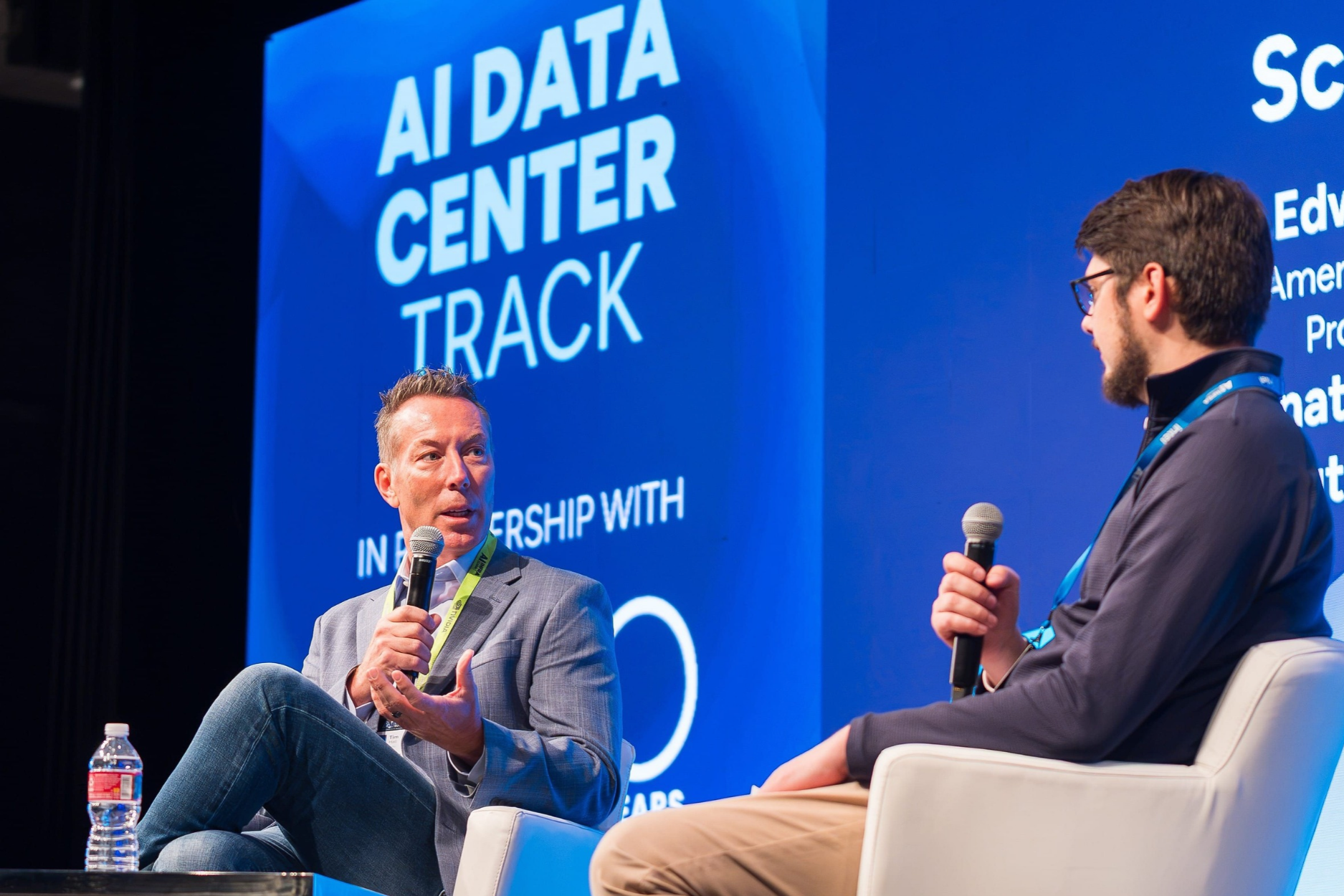
Tim Hall, VP, Data Center Operations, Meta and Edward Hamner, North American Digital Infrastructure Programs Manager, International Data Center Authority (IDCA)
 Shaneez Mohinani, VP, Head of Strategy & Operations, GridCARE; Tyler Norris, Head of Market Innovation, Google; Chelle Izzi, CCO, PG&E; Bobby Hollis, Chief Development Officer, STACK Infrastructure and Neil Millar, VP, Transmission Planning & Infrastructure Development, California ISO
-
Data center power demand is growing faster than traditional grid planning processes can accommodate, putting pressure on utilities to accelerate interconnections.
-
More transparent, real-time operational data can help utilities plan capacity more accurately while protecting reliability as data center loads grow.
-
Software and better utilization of existing grid assets could unlock significant additional capacity without relying entirely on new transmission infrastructure.
-
Flexible data centers can improve time-to-power by shifting compute, using storage, or adding generation when the grid is under stress.
-
Utilities can connect projects faster by directing data centers toward locations with available grid capacity and making greater use of existing infrastructure.
-
Rising AI rack densities are pushing traditional cooling to its limits, making liquid cooling increasingly important for next-generation infrastructure.
-
Air and liquid cooling will coexist, but the most advanced AI platforms increasingly require component-level liquid cooling to manage different power and temperature profiles.
-
Power and cooling systems need to balance efficiency with capacity, location, connectivity, and the requirements of future AI hardware.
-
Chip-level telemetry can help operators match cooling infrastructure more closely to actual demand, reducing unnecessary overprovisioning while maintaining reliability.
-
Standardized liquid-cooling interfaces and closer integration of compute, power, and cooling can simplify deployment and improve efficiency across the entire system.

Jeff Moore, VP, Strategic Partnerships, Aegis Cooling, an Airsys Company; Ryan Brown, Director, Product Management, Phononic; Steve Madara, Distinguished Engineer & VP Thermal; Vertiv, Phil Read, Senior Director, Colocation Product Management; Equinix and Racha Lwali, Head of Data Center Liquid Cooling, AWS
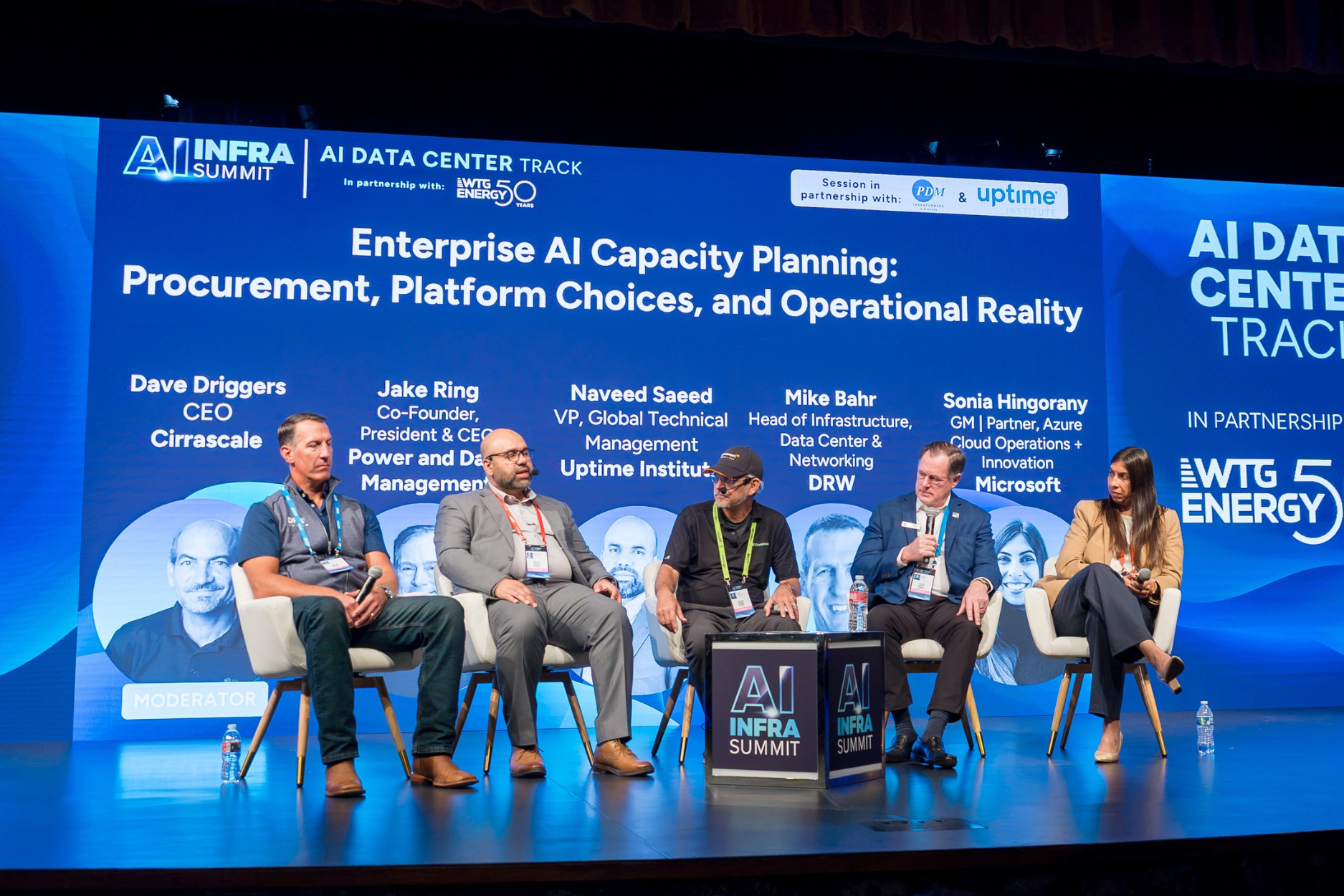
Naveed Saeed, VP, Global Technical Management, Uptime Institute; Jake Ring, Co-Founder, President & CEO, Power and Data Management; Mike Bahr, Head of Infrastructure, Data Center & Networking, DRW; Sonia Hingorany, GM | Partner, Azure Cloud Operations + Innovation, Microsoft and Dave Driggers, CEO, Cirrascale
-
Enterprise AI capacity is increasingly constrained by access to power, permitting, grid connections, equipment availability, and skilled labor.
-
Infrastructure planning should focus on useful AI work delivered per dollar and unit of power, rather than optimizing individual hardware or facility metrics.
-
Enterprises need to plan workloads, infrastructure, operations, hardware refresh cycles, and budgets together while ensuring suppliers can support smaller deployments as well as hyperscale projects.
-
Existing data centers can support more AI workloads through upgrades such as liquid cooling and improved power distribution, helping unlock capacity without building entirely new facilities.
-
Different workloads require different infrastructure: inference can often run in existing medium-density facilities, while large-scale training typically requires specialized, high-density clusters.